About Us
Mission
Ensure that all Ulster County residents with mental health challenges, struggling with substance use, or with developmental disabilities, receive the services they need to achieve the best quality of life.
Vision
We welcome people and families with complex issues into caring relationships with a wide variety of providers across all systems of care. All people deserve the promise, hope, and help to achieve productive and meaningful lives that fulfill their vision of wellness.
State Mandated Responsibilities
The Department of Mental Health is designated under NYS Mental Hygiene Law as the Local Governmental Unit (LGU). The LGU has a role in overseeing publicly funded services for people with mental health challenges, substance use disorders, and developmental disabilities within Ulster County’s behavioral health system. Other work of the LGU includes:
- Assisted Outpatient Treatment (AOT), or Kendra’s Law, provides for either voluntary or court-ordered treatment for adults who have a mental illness and who may have difficulty living safely in the community without supervision.
- Clinical Case Reviews of high-risk individuals
- Crisis Intervention Team (CIT) Training for local law enforcement agencies to provide officers with basic knowledge regarding behavioral health challenges, and to increase an officerʼs skill set and empathy when responding to these types of calls.
- Forensic and family court evaluations
- Court Advocacy & Support
- Jail Re-Entry Case Management
- Overdose prevention planning and oversight of the Ulster County Opioid Strategic Action Team
Videos
Publications
Published on May 05, 2026
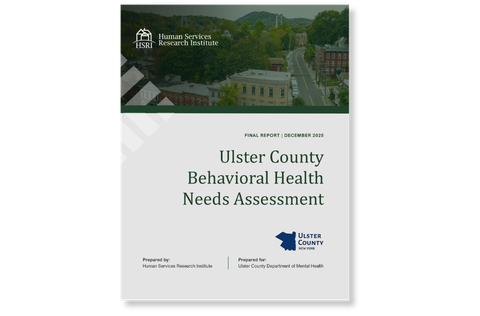 Human Services Research Institute conducted a comprehensive assessment of Ulster County’s behavioral health system for the Ulster County Department of Mental Health (UCDMH). The goal of the assessment is to inform a 5-year strategic plan to create a more efficient, effective, and equitable behavioral health system in Ulster County.
This assement includes quantitative data from a range of sources and qualitative data gathered from in-depth interviews and a series of community listening sessions to understand community resources and needs, identify gaps, and develop recommendations for UCDMH and its partners. Over 200 community members participated in interviews and listening sessions, including 51 who were engaged in interviews to share their direct lived experience of mental health or substance use services in Ulster County, or that of a family member.
Published on January 23, 2026
This slideshow summarizes the Department of Mental Health's most notable projects, accomplishments, findings, and programs from 2025.
Published on October 29, 2025
Summary of how Ulster County expended opioid settlement funds in Calendar Year 2024.
Published on February 04, 2025
This slideshow summarizes the Department of Mental Health's most notable projects, accomplishments, findings, and programs from 2024.
Published on May 01, 2022
Available resources for emotional and crisis support compiled by SPEAK (Suicide Prevention, Education, Awareness and Knowledge).
The Ulster County Department of Mental Health has put this guide together to better assist our residents and providers with connecting to needed services in the community.